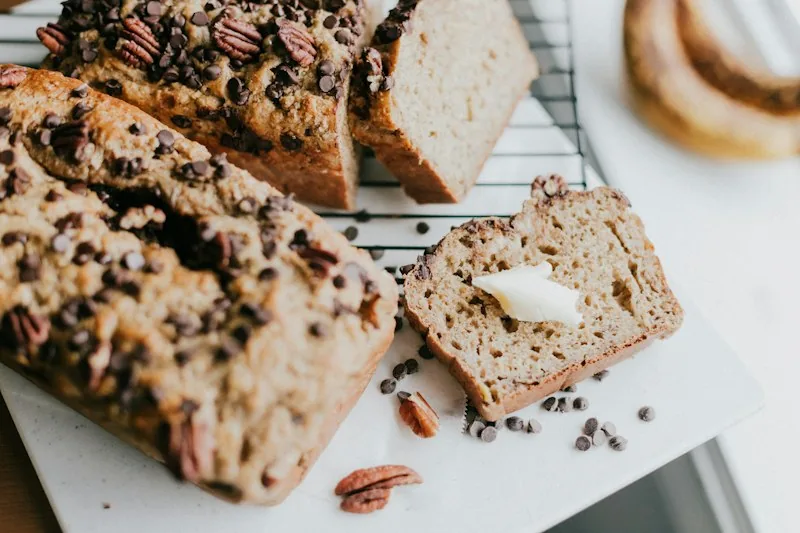
Banana Bread
Moist banana loaf with ripe bananas and brown sugar, sliced for breakfast, snacks, and lunchboxes.
Updated: Oct 7, 2026
Why you'll like it
- Ready in about 70 min.
- Serves 10 — easy to halve or double.
- Easy level — everyday equipment only.
- Storage, freezing and reheating covered below.
Banana Bread takes about 70 min and serves 10. Banana bread is widely baked in USA homes to use ripe bananas, producing a moist loaf for breakfast, snacks, and gifting.
Helpful guides
Instructions
Preheat the oven to 350°F and grease a 9 by 5-inch loaf pan, then line the bottom with parchment. Mash bananas in a large bowl until mostly smooth with small lumps remaining. Measure remaining ingredients.
Ripe bananas with dark spots give the desired moisture and flavor for this loaf.
Whisk melted butter and brown sugar into the mashed bananas until combined. Add eggs and vanilla and whisk until smooth. This wet base carries moisture through the crumb.
Ensure butter is warm, not hot, so eggs incorporate without curdling or creating streaks in the batter.
Stir flour, baking soda, and salt in a separate bowl, then fold into banana mixture in two additions. Mix gently just until flour disappears. Fold in walnuts if using.
Overmixing develops gluten and makes the loaf dense and rubbery instead of tender and evenly risen.
Pour batter into the prepared pan and smooth the top. Tap gently to settle. Bake at 350°F for 50 to 60 minutes until deep golden and a skewer in the center shows moist crumbs or comes out clean.
Tent loosely with foil if the top browns too quickly.
Cool the loaf in the pan on a wire rack for 15 minutes, then lift out and cool completely before slicing. Cutting too early compresses the crumb and releases steam needed for texture. Use a serrated knife with gentle sawing motion for even 0.75-inch slices without tearing.
Serve plain, with butter, or toasted. For food safety, do not leave cut loaf at room temperature beyond serving time. Wrap cooled leftovers promptly.
Complete cooling firms the interior, improves slicing, and allows banana flavor to settle evenly through each slice.
Troubleshooting — fixes, not repeats
- If the center sinks, the loaf was underbaked or bananas were oversized. Measure about 1.5 cups mashed banana, test with a skewer at 50 minutes at 350°F, and avoid opening the oven during the first 40 minutes of baking.
- If the loaf is dry, flour was overmeasured or baking ran long. Spoon flour into cups, check 5 minutes early, and remove when crumbs are moist. Melted butter should be measured liquid, not softened, for accurate moisture balance.
- If the top browns too fast, the rack is too high or the oven runs hot. Move to center rack, verify with a thermometer, and tent foil loosely after 35 minutes. Dark pans brown faster; reduce heat to 325°F if consistently overbrowning.
- If slices crumble, the loaf was cut warm. Cool at least 1 hour, use a serrated knife, and avoid pressing down while slicing. Day-old loaf slices more cleanly and toasts well for breakfast serving.
Make it your way
- Spicier version: Add 0.75 cup chocolate chips instead of walnuts for a dessert loaf, or add 1 tsp ground cinnamon and 0.25 tsp nutmeg for spice.
- For muffins, divide batter among 12 lined cups and bake at 350°F for 20 minutes.
- Reduce brown sugar to 0.5 cup for a less sweet breakfast version.
Storage & reheating
Cool leftovers within 2 hours, then refrigerate in a covered container and use within 3 to 4 days. Reheat only the portion you will eat until steaming hot throughout — poultry and reheated rice should reach 165°F (74°C).
Freeze slices up to 3 months in freezer bags with air removed.
Thaw overnight in the refrigerator.
FAQ
How ripe should bananas be?
Use bananas with many brown spots and soft texture, yielding about 1.5 cups mashed. Yellow firm bananas give less flavor and drier crumb. If bananas are not ripe, bake unpeeled at 300°F for 15 minutes until skins darken, then cool.
Can I make this without nuts?
Yes. Omit walnuts with no other changes. The loaf bakes the same time at 350°F. For added texture, use chocolate chips or keep plain. Nut-free loaves slice cleanly and suit school lunchbox rules requiring nut-free foods.
Why did my loaf crack on top?
A central crack is normal for quick breads as the interior rises after the crust sets. It does not affect taste. To reduce cracking, keep oven at 350°F, fill the pan no more than two-thirds full, and avoid overmixing the batter.