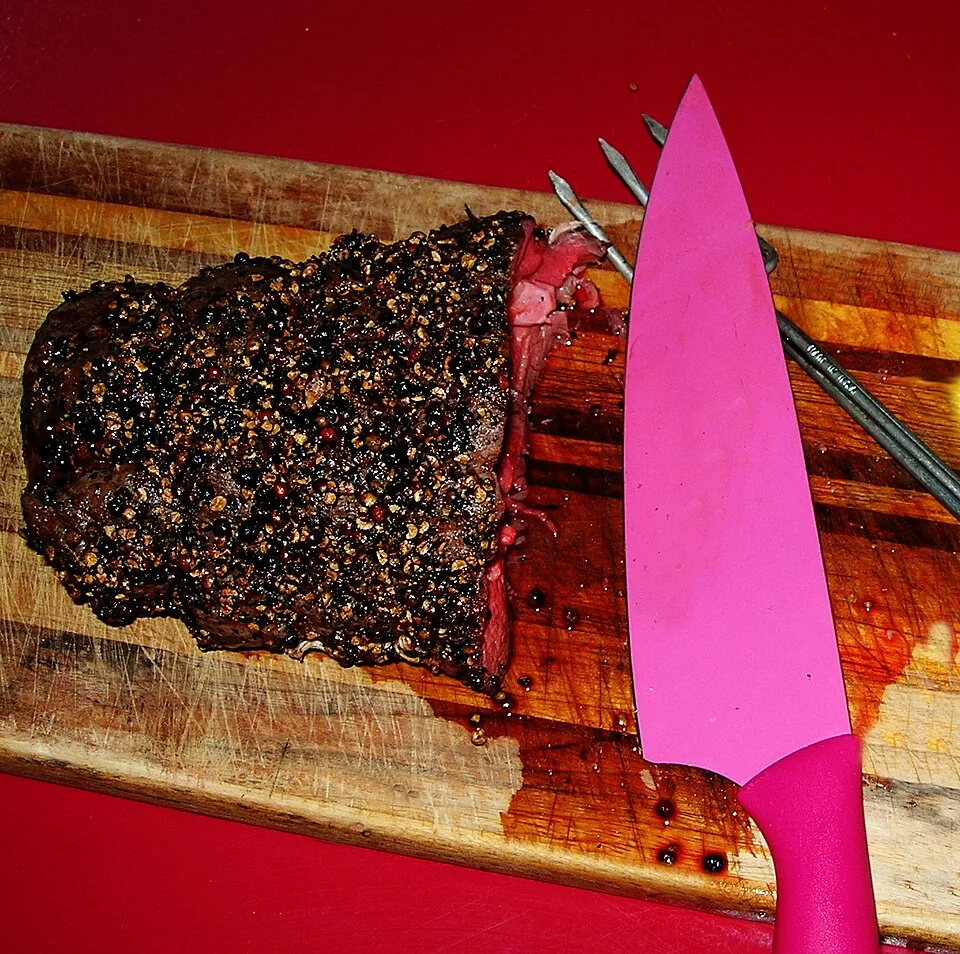
Beef Tenderloin Roast
Pepper-crusted beef tenderloin roast with garlic and herbs, roasted to pink medium-rare for Christmas dinner.
Updated: Oct 7, 2026
Why you'll like it
- Ready in about 1 hour 30 minutes.
- Serves 8 — easy to halve or double.
- Medium level — everyday equipment only.
- Storage, freezing and reheating covered below.
Beef tenderloin roast is a Christmas favorite because the lean center cut cooks evenly and slices into tender portions with little waste. A 3.5 to 4 pound center-cut roast is tied at intervals, rubbed with olive oil, crushed garlic, rosemary, thyme, salt, and cracked pepper, then seared before roasting at 425 degrees Fahrenheit.
Helpful guides
Instructions
Heat the oven to 425 degrees Fahrenheit and set a rack in a roasting pan. Pat the tenderloin dry with paper towels and fold the thin tail end under, tying the roast with kitchen twine every 2 inches for even thickness. Even shape prevents thin sections from overcooking.
Rub the roast all over with olive oil and Dijon, then press the garlic, rosemary, thyme, salt, and pepper onto the surface. Let the roast stand at room temperature 30 to 45 minutes so the center roasts evenly. Do not wash raw beef; washing spreads bacteria to sinks and counters.
Sear the roast in a hot ovenproof skillet with 1 tablespoon of oil over medium-high heat, turning every 2 minutes until browned on all sides, about 8 minutes total. Transfer the roast to the rack in the roasting pan and pour any skillet juices over the top.
Roast 40 to 55 minutes until an instant-read thermometer in the thickest center reads 135 to 140 degrees for medium-rare or 145 degrees for medium. Start checking at 35 minutes since tenderloin cooks quickly and ovens vary. Tent loosely with foil if the crust darkens early.
Transfer the roast to a cutting board and rest 15 minutes so juices settle and the temperature rises to a safe 145 degrees or higher. Snip and discard the twine before slicing so no string reaches the table. Resting is required for both juiciness and food safety.
Slice into half-inch medallions with a sharp carving knife and arrange on a warm platter with horseradish sauce. Serve with roasted potatoes and green beans for eight portions. Refrigerate leftovers promptly and reheat gently until steaming and 165 degrees inside.
Troubleshooting — fixes, not repeats
- If the roast cooks unevenly, the tail was left unfolded; always tuck and tie so thickness stays uniform from end to end. An even cylinder is the main control for predictable timing.
- If the center is underdone while the crust looks finished, lower the oven to 350 degrees and continue roasting to temperature. Color alone never proves doneness in thick roasts.
- If juices flood the cutting board, the roast was sliced too soon; rest the full 15 minutes and use a board with a groove. Early slicing also drops the final temperature.
- If the pepper crust falls off, the surface was wet or the oil layer too thin. Pat the meat fully dry and press seasonings firmly into the oiled surface before searing.
Make it your way
- Serving with rice or naan: For a mushroom version, serve slices over sauteed mushrooms deglazed with beef broth and a spoonful of sour cream.
- For a horseradish crust version, mix half a cup of prepared horseradish with the Dijon and spread it over the roast before adding herbs.
- Keep the 425 degree roast, the tying, and the 145 degree finish with rest so tenderness stays consistent.
- Both styles pair with roasted root vegetables and Yorkshire pudding.
Storage & reheating
Cool leftovers within 2 hours, then refrigerate in a covered container and use within 3 to 4 days. Reheat only the portion you will eat until steaming hot throughout — poultry and reheated rice should reach 165°F (74°C).
Reheat gently in a 300 degree oven covered with broth until steaming and 165 degrees throughout to avoid toughening.
Freeze tightly wrapped portions up to 3 months, then thaw overnight in the refrigerator before reheating.
FAQ
What temperature is beef tenderloin done?
Whole muscle beef is safe at 145 degrees Fahrenheit followed by at least a 3 minute rest, with many cooks pulling at 135 to 140 degrees and resting to reach that mark. Use an instant-read thermometer in the thickest center. Rest 15 minutes before slicing so juices stay in the meat.
Should I sear before roasting?
Searing builds a browned flavorful crust that oven heat alone develops more slowly. Brown all sides in a hot skillet for about 8 minutes, then roast as directed. If the skillet smokes heavily, reduce heat slightly and keep turning the roast.
Can I prepare the roast ahead?
Yes. Trim, tie, and season the roast up to one day ahead, then refrigerate uncovered on a rack so the surface dries for better browning. Let it stand at room temperature 45 minutes before searing and roasting. Seasoning ahead also firms the crust.