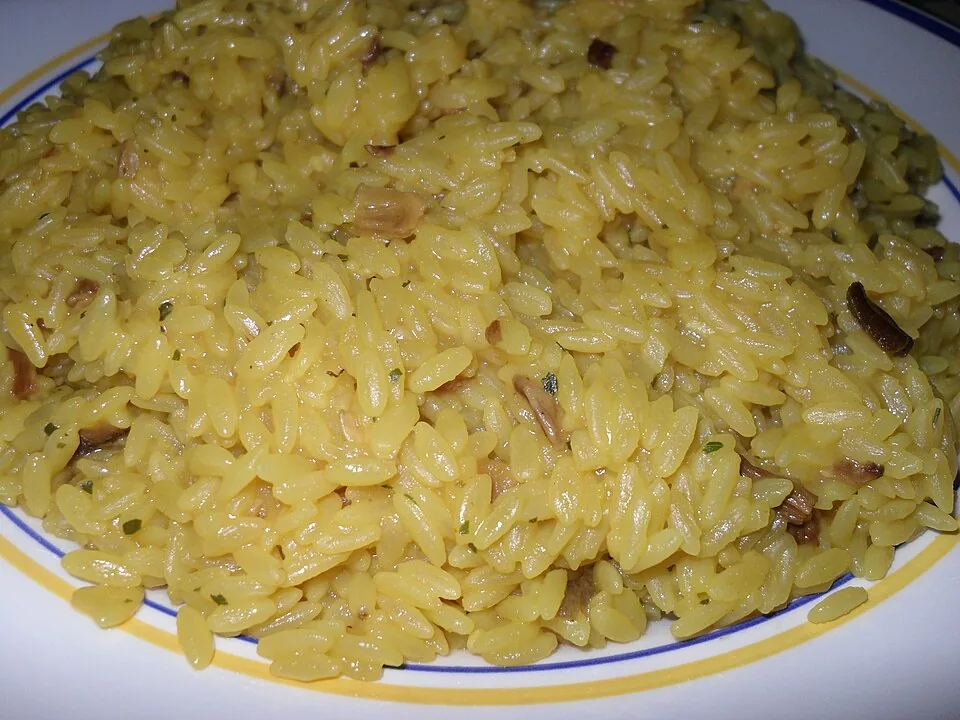
Mushroom Risotto
Creamy Parmesan risotto with browned mushrooms and thyme, stirred low and slow for Italian-style dinners.
Updated: Oct 7, 2026
Why you'll like it
- Ready in about 50 min.
- Serves 4 — easy to halve or double.
- Medium level — everyday equipment only.
- Stays juicy when cooked to 165°F (74°C).
- Storage, freezing and reheating covered below.
Ready in 50 min, this mushroom Risotto serves 4. Mushroom risotto is a classic Italian-style first course across the USA, valued for creamy texture built without any cream.
Helpful guides
Instructions
Pour the broth into a saucepan and hold it at a bare simmer over low heat. Warm broth keeps the rice cooking steadily with every addition, while cold broth shocks the grains and turns the texture gummy. Taste the broth now and season lightly, since it seasons the entire dish.
Sear the mushrooms in 1 tablespoon of olive oil over medium-high heat 6 to 8 minutes, turning once, until deeply browned with crisp edges. Work in two batches so they roast rather than steam. Season with salt, thyme, and garlic in the final minute, then move to a clean plate.
Melt 2 tablespoons butter in a large deep skillet over medium heat and soften the onion 3 to 4 minutes until translucent. Add the rice and stir 2 minutes until edges turn translucent with white dots at the centers. Toasting builds a firm shell that releases starch slowly for creaminess.
Pour in the wine and simmer 2 minutes, scraping the pan, until the sharp alcohol aroma cooks off and the pan looks nearly dry. This deglazing lifts the browned onion sugars into the dish. Keep stirring gently so the grains do not catch on the hot pan bottom.
Add warm broth one ladle at a time, stirring and waiting until each addition nearly absorbs before adding the next. After 20 to 25 minutes the rice should look creamy, with grains tender but firm at the center. Fold the mushrooms in during the final 5 minutes to warm through.
Remove from the heat and beat in the remaining butter and the Parmesan until glossy, adding splashes of warm broth until the risotto flows in a slow wave off the spoon. Rest 2 minutes, taste for salt, and serve at once in warm shallow bowls with extra cheese.
Troubleshooting — fixes, not repeats
- If the center stays chalky and hard, the risotto undercooked or the broth went in cold. Keep additions warm, extend stirring 5 minutes, and test grains often near the end. Proper risotto keeps a firm bite; chalky white cores always need more time and broth.
- If the texture turns gluey and stiff, the rice overcooked or the wrong variety went in. Use Arborio or Carnaroli without rinsing, since surface starch creates the creaminess. Serve immediately after beating in the butter; risotto firms fast and extra beating turns it pasty.
- If the flavor tastes flat, the broth was unsalted or the cheese was sparse. Season the broth first, salt the mushrooms while searing, and finish with the full measure of Parmesan. A squeeze of lemon at the table also wakes up dairy-rich risotto without extra cooking time.
- If the pan bottom scorches, the heat ran too high between additions. Hold a gentle simmer, stir the corners often, and lower the burner as the mixture thickens. Scorched starch taints the whole batch, so start the next round lower and slower.
Make it your way
- Old Dhaka style: For a heartier main dish, brown sliced Italian sausage or diced chicken first and fold it in with the mushrooms.
- Stir in 2 cups of peas or blanched asparagus pieces during the last 5 minutes for a spring version.
- Finish with a thread of truffle oil instead of extra butter for earthy aroma.
- For a hands-off method, bake the same ingredients covered at 350 degrees for 25 minutes, then beat in butter and cheese.
Storage & reheating
Cool leftovers within 2 hours, then refrigerate in a covered container and use within 3 to 4 days. Reheat only the portion you will eat until steaming hot throughout — poultry and reheated rice should reach 165°F (74°C).
Reheat in a pan over medium-low heat with splashes of broth, stirring until creamy and steaming throughout, at least 165 degrees.
Freeze up to 2 months.
FAQ
Can I substitute another rice for Arborio?
Short-grain alternatives like Carnaroli work best and need the same method. Medium-grain rice cooks creamier but softer. Long-grain and converted rice never release enough starch and stay separate, so they make pilaf rather than risotto. Keep the ladle-by-ladle technique whatever short grain you choose.
Is the white wine necessary?
No, but it adds brightness that water alone misses. Replace the half cup with extra broth plus 1 teaspoon of lemon juice for similar lift. Add it at the same stage and simmer until nearly dry. The alcohol cooks off, leaving mild acidity.
Do I really need to stir constantly?
Near-constant stirring gives the creamiest result, but stirring every minute or two also succeeds. What matters most is warm broth, gradual additions, and attentive heat. Stirring too little lets the bottom catch, while beating hard at the end turns texture gluey.