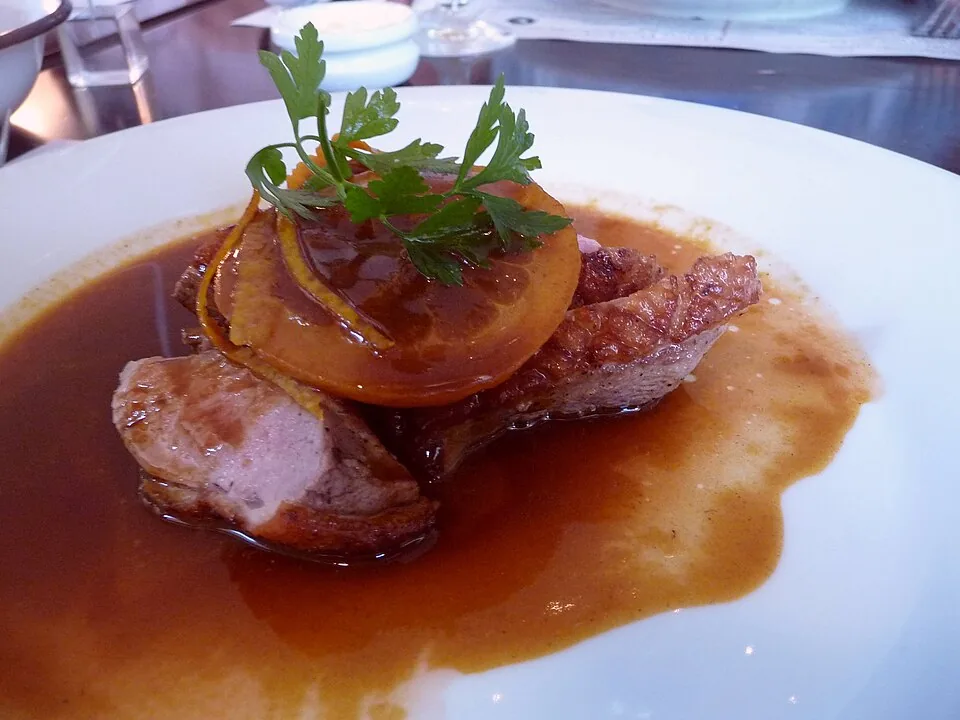
Orange Glazed Duck
Slow-roasted whole duck with sticky orange honey glaze, crisp skin, and tender meat for Christmas dinner.
Updated: Oct 7, 2026
Why you'll like it
- Ready in about 2 hours 30 minutes.
- Serves 4 — easy to halve or double.
- Medium level — everyday equipment only.
- Storage, freezing and reheating covered below.
Orange glazed duck brings a restaurant style centerpiece to Christmas with crisp skin and a sweet tangy coating made from pantry staples. A 5 to 6 pound whole duck is scored through the skin, seasoned with salt, pepper, and five spice powder, then roasted low at 325 degrees Fahrenheit so the thick layer of fat renders slowly.
Helpful guides
Instructions
Heat the oven to 325 degrees Fahrenheit and set a rack in a roasting pan. Remove giblets and neck from the duck and pat the bird dry inside and out. Trim fat pads from the cavity opening and prick the skin all over with a fork without piercing the meat.
Score the breast and thigh skin lightly in a crosshatch pattern, cutting just through the fat layer. Rub salt, pepper, and five spice powder evenly over the whole bird and inside the cavity. Scoring plus pricking lets rendering fat escape so the skin crisps instead of softening.
Set the duck breast side up on the rack and roast 1 hour, then carefully drain the collected fat from the pan into a heatproof jar. Flip the duck breast side down, roast 45 minutes more, and drain fat again. Save the strained fat for roasting potatoes another day.
Whisk the orange juice, zest, honey, soy sauce, vinegar, and ginger in a small saucepan and simmer 5 minutes until slightly syrupy. Stir in the cornstarch mixture and simmer 1 minute more until the glaze coats a spoon. Keep warm off the heat while the duck finishes.
Raise the oven to 400 degrees, turn the duck breast side up, and brush with glaze. Roast 25 to 30 minutes, brushing every 10 minutes, until the skin is deep amber and the thigh reads 165 degrees Fahrenheit. Do not wash raw poultry; washing spreads bacteria to sinks and counters.
Rest the duck on a cutting board 15 minutes before carving into legs, thighs, and breast halves. Warm the remaining glaze and serve alongside with roasted potatoes and green beans. Each serving has about 610 kilocalories.
Refrigerate leftovers promptly.
Troubleshooting — fixes, not repeats
- If the skin stays pale and soft, the oven ran cool or fat was never drained. Verify 325 degrees with a thermometer and drain fat on schedule so heat crisps rather than steams the skin.
- If the glaze burns at 400 degrees, the honey layer was too thick or the rack sat too high. Brush thin coats, keep the bird centered, and tent dark spots with foil until the thigh hits 165 degrees.
- If the duck smokes heavily, pooled fat is scorching; drain the pan promptly and add a quarter cup of water. A rack that holds the bird above drippings also cuts smoking.
- If carving feels difficult, rest the full 15 minutes so fibers relax and juices settle. Use a sharp carving knife and separate legs first, then slice each breast half across the grain.
Make it your way
- Spicier version: For a savory herb version, skip the sweet glaze and rub the skin with garlic, thyme, and cracked pepper before the final high heat roast.
- Serving with rice or naan: Serve either style with wild rice and roasted root vegetables.
- For a cherry version, replace orange juice with tart cherry juice and orange zest with 1 teaspoon of almond extract in the glaze.
- Keep scoring, fat draining, and the 165 degree thigh finish unchanged so the skin still crisps.
Storage & reheating
Cool leftovers within 2 hours, then refrigerate in a covered container and use within 3 to 4 days. Reheat only the portion you will eat until steaming hot throughout — poultry and reheated rice should reach 165°F (74°C).
Reheat pieces skin side up in a 375 degree oven until crisp and steaming with a center of 165 degrees.
Freeze carved meat up to 3 months in freezer bags with air pressed out, then thaw overnight in the refrigerator.
FAQ
Is duck safe at 165 degrees?
Yes. Duck is poultry, so the thigh and breast should reach 165 degrees Fahrenheit on an instant-read thermometer. The meat may look slightly pink from its rich myoglobin even when fully cooked, so trust the thermometer rather than color alone.
What do I do with all the duck fat?
Strain warm fat through a fine mesh sieve into a clean jar and refrigerate up to 6 months or freeze up to 1 year. Use spoonfuls for roasting potatoes, searing greens, or frying eggs. Discard any fat with scorched or off smells.
Can I use duck breasts instead of whole duck?
Yes. Score 4 bone-in duck breasts, season the same way, and sear skin side down in a cold ovenproof skillet until crisp, then roast at 400 degrees 8 to 12 minutes to 165 degrees. Brush with the same orange glaze during the last 5 minutes and rest 5 minutes before slicing.