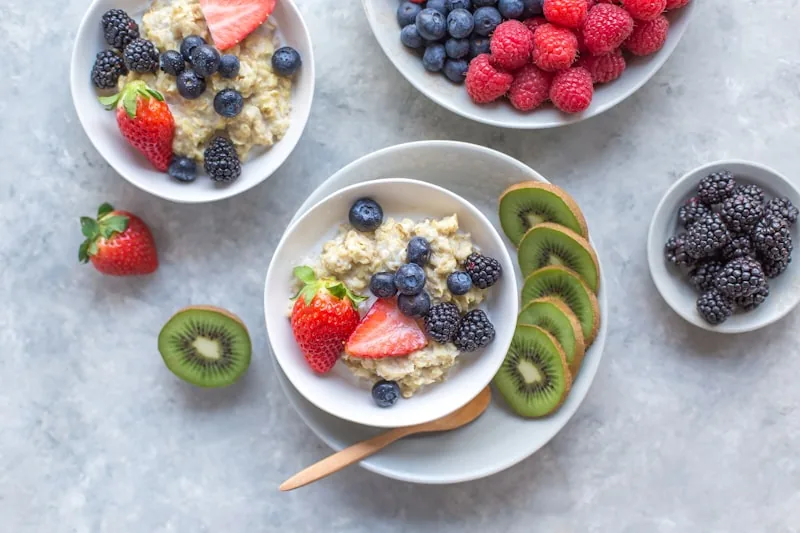
Quick Overnight Oats
Creamy no-cook oats with milk, yogurt, chia, peanut butter, and berries for busy mornings.
Updated: Oct 7, 2026
Why you'll like it
- Ready in about 10 min plus overnight.
- Serves 2 — easy to halve or double.
- Easy level — everyday equipment only.
- Storage, freezing and reheating covered below.
This Quick Overnight Oats recipe takes 10 min plus overnight and makes 2 servings. Overnight oats are a no-cook American meal-prep breakfast made by soaking rolled oats in milk and yogurt overnight until soft and creamy.
Helpful guides
Instructions
Combine milk, yogurt, peanut butter, honey, vanilla, and salt in a large bowl and whisk until smooth and fully blended. Mixing the creamy base first ensures peanut butter distributes evenly rather than clumping around dry oats. Taste and adjust sweetness slightly, remembering fruit adds natural sugar after soaking.
Stir in rolled oats and chia seeds until every oat is coated and seeds are dispersed without dry pockets. Chia absorbs liquid overnight and thickens the mixture, so even distribution prevents lumps and uneven gelled spots. Divide mixture evenly between two pint-size mason jars or sealed containers.
Top each jar with half the berries, pressing lightly so juices mingle during chilling. Seal tightly and refrigerate at least eight hours and up to four days at 40 degrees Fahrenheit or below. Oats soften gradually, reaching a creamy yet chewy texture by morning.
In the morning, stir each jar well and check consistency. If too thick, add milk one tablespoon at a time until spoonable but not soupy. If too thin, stir in one teaspoon of chia and rest ten minutes.
Proper overnight oats should mound softly on a spoon.
Add toppings just before eating, such as sliced banana, chopped peanuts, or extra berries for color and crunch. Eat chilled directly from the jar or warm in the microwave for 60 to 90 seconds, stirring midway, until reaching desired temperature. Keep cold jars upright during transport to avoid leaks.
For weekly prep, double the base and store fruit separately to maintain freshness, combining the night before eating. Wash jars with hot soapy water between batches. Discard any jars left above 40 degrees Fahrenheit for more than two hours to maintain food safety.
Troubleshooting — fixes, not repeats
- If oats are soupy in the morning, the ratio was off or steel-cut oats were used; use rolled oats and measure milk accurately, then add chia to thicken.
- If oats are gummy or pasty, they soaked too long or used instant oats; limit to four days refrigerated and choose old-fashioned oats for chewy structure.
- If peanut butter clumps, warm it ten seconds and whisk fully into milk before adding oats so fat emulsifies smoothly into the base.
- If berries bleed color, add delicate fruit in the morning rather than overnight; hearty blueberries can soak overnight while raspberries are best fresh.
Make it your way
- For apple cinnamon oats, replace berries with one diced apple, one-half teaspoon cinnamon, and chopped walnuts, adding apples overnight for softness.
- For chocolate banana oats, add one tablespoon cocoa powder to the base and top with sliced banana and mini chocolate chips.
- Keep oat, milk, yogurt, and chia ratios unchanged so texture remains creamy and safe across flavors.
Storage & reheating
Cool leftovers within 2 hours, then refrigerate in a covered container and use within 3 to 4 days. Reheat only the portion you will eat until steaming hot throughout — poultry and reheated rice should reach 165°F (74°C).
Do not freeze, as yogurt separates and oats turn watery on thawing.
FAQ
Can I use steel-cut oats?
Not recommended without cooking because they stay hard and chewy overnight. If using them, cook first and cool, or soak 24 hours with extra milk and expect firmer texture. Rolled oats provide the classic creamy result with eight-hour soaking and require no additional preparation.
How do I make it dairy-free?
Use unsweetened almond or oat milk and coconut yogurt in equal amounts. Choose natural peanut butter and maple syrup instead of honey if vegan. Texture remains creamy, though protein drops slightly, so add extra nuts or use soy milk for higher protein content.
Is it eaten cold or warm?
Both work. Cold preserves creamy thickness and is fastest for commuting. To warm, microwave 60 to 90 seconds, stir, and add a splash of milk if thickened. Heat to steaming without boiling, especially if yogurt is included, to avoid curdling and maintain smooth consistency.