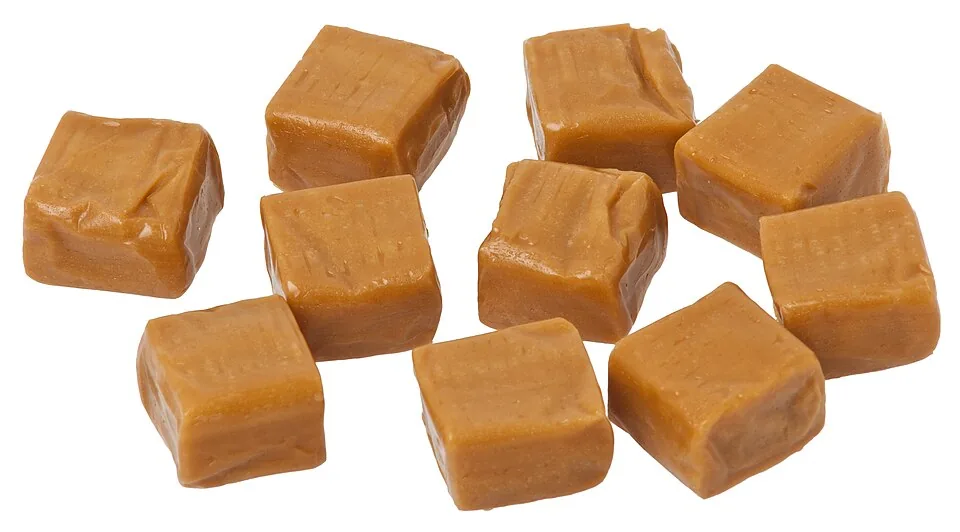
Salted Caramels
Soft cream caramels sprinkled with flaky salt, wrapped for stockings and dessert trays.
Updated: Oct 7, 2026
Why you'll like it
- Ready in about 1 hr.
- Serves 48 — easy to halve or double.
- Medium level — everyday equipment only.
- Storage, freezing and reheating covered below.
Ready in 1 hr, this salted Caramels serves 48. Salted caramels are a favorite USA Christmas candy, pairing buttery soft chew with bright flakes of sea salt that balance the sweetness.
Helpful guides
Instructions
Line an 8-inch square pan with a parchment sling, letting paper overhang two sides for lifting, and lightly butter any exposed corners. Warm the cream in a small pan until steaming, then keep warm off heat. Cold cream dropped into hot sugar seizes into lumps that never smooth out.
Combine the sugar, corn syrup, water, and fine salt in a heavy 3-quart saucepan over medium heat, stirring until dissolved and boiling. Clip on a candy thermometer clear of the bottom. Stirring past the boil splashes crystals that grain the finished caramels into sandy chew.
Boil without stirring until the mixture turns light amber and reads 250 degrees, about 10 minutes. Swirl the pan gently if color builds unevenly. Steady medium heat builds flavor gradually; rushing on high heat scorches edges before the center reaches firm-ball stage.
Lower the heat slightly, add the cubed butter, then drizzle in the warm cream while stirring constantly until smooth. The mixture bubbles up furiously and cools down, which is expected. Continue cooking and stirring to 248 degrees firm-ball stage, watching color deepen to medium amber.
Remove from heat, stir in the vanilla, and pour into the prepared pan without scraping the pot. Sprinkle flaky salt evenly over the surface while warm so crystals grip. Cool at room temperature for 3 hours until firm enough to cut without oozing.
Lift the slab out with the sling, cut into forty-eight squares with a buttered sharp knife, and wrap each in wax paper twists. Clean the blade often, since sticky buildup drags cuts. Serve at cool room temperature for the softest chew and brightest salt contrast.
Troubleshooting — fixes, not repeats
- If the caramels turn grainy, crystals seeded the batch from stirring or wall splashes. Dissolve sugar fully before boiling, avoid stirring during the boil, and brush walls with a wet pastry brush. Grainy candy cannot be smoothed after pouring, so prevention matters most.
- If the texture stays too soft, it undercooked below firm-ball stage. Cook to a full 248 degrees on a tested thermometer and cool 3 hours before judging. Warm kitchens keep caramels loose; chilling 20 minutes firms the slab for cleaner cutting without changing flavor.
- If the caramels turn hard, they cooked past 250 degrees or the thermometer touched the pan. Clip the probe in liquid only, test accuracy in boiling water, and remove promptly at 248. Hard batches chop into chip-like pieces for ice cream topping instead of wrapping.
- If the salt disappears, fine salt went into the base while flaky salt belongs on top. Sprinkle flaky crystals over the warm poured surface so they sit visibly and crunch. Salting after cooling bounces off; salting molten candy melts the flakes away entirely.
Make it your way
- Spicier version: For chocolate caramels, stir 0.5 cup of chopped dark chocolate into the hot mixture off the heat until melted, keeping temperatures the same.
- Add 1 teaspoon of espresso powder with the sugar for mocha caramels suited to coffee trays.
- Dip cut squares in melted chocolate and re-salt the tops for chocolate-covered gifts.
- For apple cider caramels, replace 0.25 cup of cream with boiled cider syrup and cook to the same 248 degrees.
Storage & reheating
Cool leftovers within 2 hours, then refrigerate in a covered container and use within 3 to 4 days. Reheat only the portion you will eat until steaming hot throughout — poultry and reheated rice should reach 165°F (74°C).
Freeze wrapped pieces up to 3 months; thaw unopened.
FAQ
What temperature makes soft caramels?
248 degrees firm-ball stage gives soft chew that holds shape at room temperature. Lower readings near 240 make spoonable sauce, while 250 plus turns hard and sticky-chewy. Test your thermometer in boiling water first, clip it clear of the pan bottom, and remove the pot promptly at target.
Why did my cream cause lumps?
Cold cream shocks boiling sugar into seized clumps that stirring cannot fix. Warm the cream to steaming before adding, drizzle it in slowly while stirring, and keep the burner steady. If minor lumps appear, stir over low heat until smooth before continuing to 248 degrees.
How do I cut without sticking?
Cool the slab 3 hours until fully firm, lift it out with the parchment sling, and cut with a long sharp knife buttered and wiped clean between cuts. Chilling 20 minutes firms sticky slabs further. Wrap each piece immediately in wax paper so cut faces never touch.