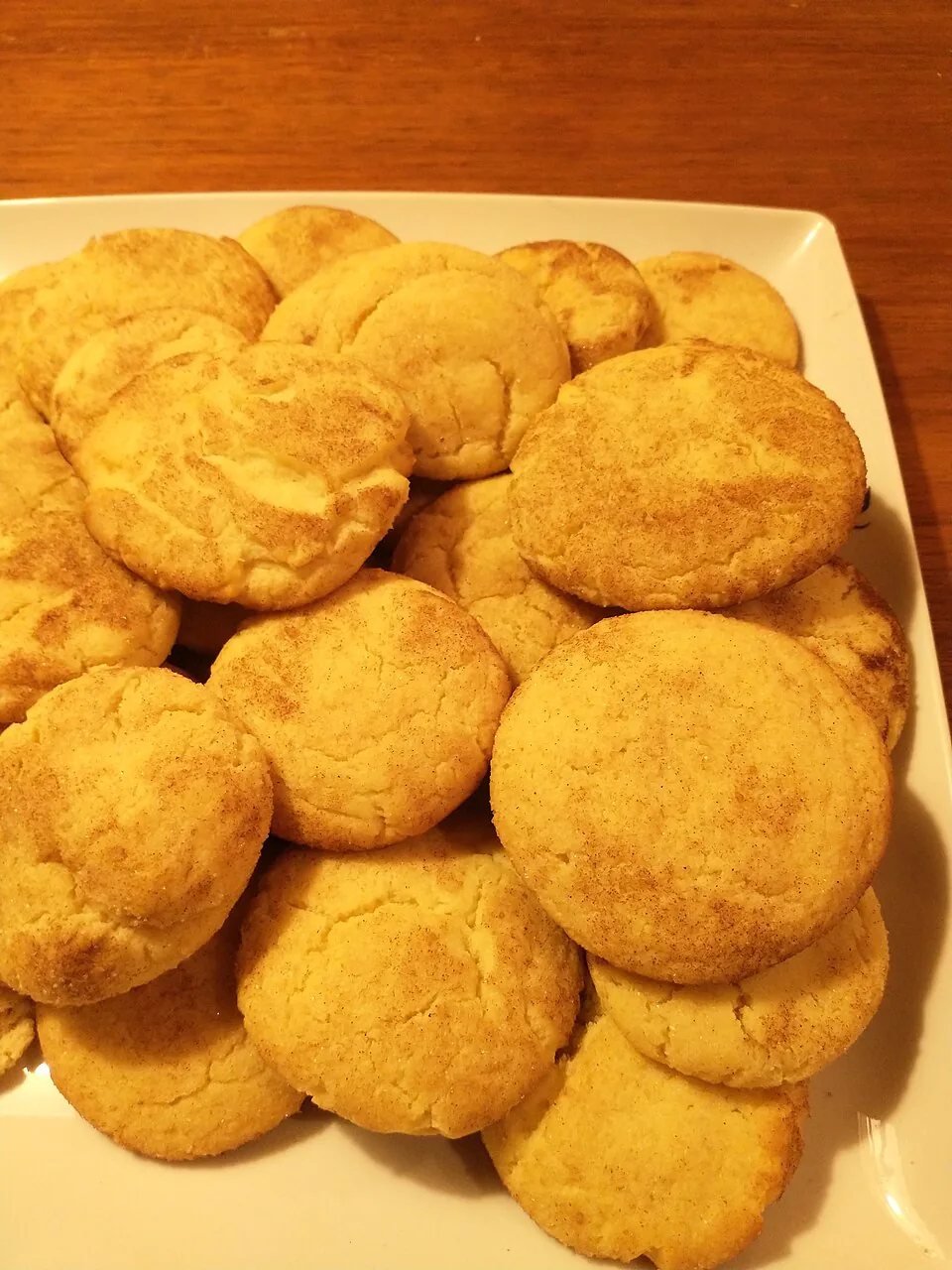
Snickerdoodles (Cinnamon Sugar Cookies)
Soft cinnamon-sugar snickerdoodles with tangy cream-of-tartar chew, baked for cookie trays and lunchboxes.
Updated: Oct 7, 2026
Why you'll like it
- Ready in about 45 min.
- Serves 30 — easy to halve or double.
- Easy level — everyday equipment only.
- Storage, freezing and reheating covered below.
Snickerdoodles (Cinnamon Sugar Cookies) takes about 45 min and serves 30. Snickerdoodles are a classic USA cookie-tray favorite, soft and chewy with crackled tops rolled in cinnamon sugar.
Helpful guides
Instructions
Heat the oven to 375 degrees and line two baking sheets with parchment paper. Measure the flour by spooning it into cups without packing, since heavy flour makes hard cookies. Soften the butter until it dents easily but still holds shape; melted butter causes flat, greasy spread.
Whisk the flour, cream of tartar, baking soda, and salt in a medium bowl until evenly combined. Cream of tartar supplies the gentle tang and chew that separate snickerdoodles from plain sugar cookies, so confirm it is fresh and lump-free. Set the dry mixture aside within reach.
Beat the butter with 1.25 cups of the sugar on medium speed 2 to 3 minutes until pale and fluffy. Proper creaming traps air that keeps centers soft while edges crisp. Add the eggs one at a time with the vanilla, beating well after each until smooth and light.
Add the dry mixture on low speed just until no streaks remain, stopping as soon as the flour disappears. Overmixing develops gluten and turns tender cookies tough. If the dough feels warm and slack, chill the bowl 15 minutes so scoops hold their shape on the sheet.
Stir the remaining 0.25 cup sugar with the cinnamon in a small bowl. Scoop 1.5-tablespoon mounds and roll each thickly in the mixture, coating every side generously. Thick rolling builds the crackled cinnamon shell that defines the cookie; thin dusting bakes pale and patchy.
Bake one sheet at a time 9 to 11 minutes until edges look set and centers appear puffy and just underdone. Cool on the sheet 5 minutes so centers finish setting, then transfer to a rack. Warm cookies crush easily, so cool fully before stacking or packing for storage.
Troubleshooting — fixes, not repeats
- If cookies spread flat and thin, the butter melted or the sheets were hot. Use softened, not melted, butter, chill warm dough 15 minutes, and cool sheets between batches. Fresh baking soda also matters, since weak leavening flattens spread and dulls the crackled top.
- If cookies bake hard instead of chewy, they overbaked or flour ran heavy. Pull them while centers still look puffy and soft, spoon flour without packing, and cool on the sheet only 5 minutes. Residual heat finishes the centers; longer sheet time keeps baking them dry.
- If the tangy flavor is missing, the cream of tartar was stale or skipped. Check the date, since old powder loses strength, and do not substitute baking powder one-for-one. The full 2 teaspoons against 1 teaspoon of soda creates the mild tang and pillowy chew.
- If the cinnamon coat looks thin or uneven, the dough balls rolled too quickly or the mix ran short. Roll each mound twice through a deep bowl of cinnamon sugar and replenish the mix halfway. Damp, slightly chilled dough grips the coating better than warm, greasy dough.
Make it your way
- Spicier version: Roll in pumpkin pie spice mixed with sugar for a fall batch.
- For brown-butter snickerdoodles, brown the butter until nutty, cool until solid but soft, and cream as directed.
- Swap 0.25 cup of flour for cocoa for a chocolate version with the same bake time.
- Press the dough into a parchment-lined 9-by-13-inch pan and bake 20 to 24 minutes for chewy cookie bars.
Storage & reheating
Cool leftovers within 2 hours, then refrigerate in a covered container and use within 3 to 4 days. Reheat only the portion you will eat until steaming hot throughout — poultry and reheated rice should reach 165°F (74°C).
Freeze baked cookies in freezer bags up to 3 months and thaw 1 hour at room temperature.
Freeze scooped dough balls up to 3 months and bake from frozen, adding 2 minutes.
FAQ
What does cream of tartar do?
It adds the signature gentle tang and helps the cookies stay soft and chewy with crackled tops. Combined with baking soda, it leavens the dough while keeping centers pillowy. Do not skip it; without it, the cookies taste like plain sugar cookies with flat, smooth surfaces.
Can I substitute for cream of tartar?
Yes, in a pinch. Replace the 2 teaspoons of cream of tartar plus 1 teaspoon of soda with 2 teaspoons of baking powder. The cookies puff well but lose some tang and chew. Lemon juice also works chemically but adds flavor, so the baking powder swap stays closest to classic.
Do I need to chill the dough?
Chilling is optional unless your kitchen is warm. Fifteen to 30 minutes firms the butter for thicker cookies with less spread and a heavier cinnamon coat. If chilled longer than 1 hour, let scoops warm 10 minutes so centers bake through evenly without pale, raw middles.